English
 Spanish
 French
 German
 Norwegian
 Portuguese
 Swedish
 Italian
 Russian
 Simplified Chinese
 Japanese


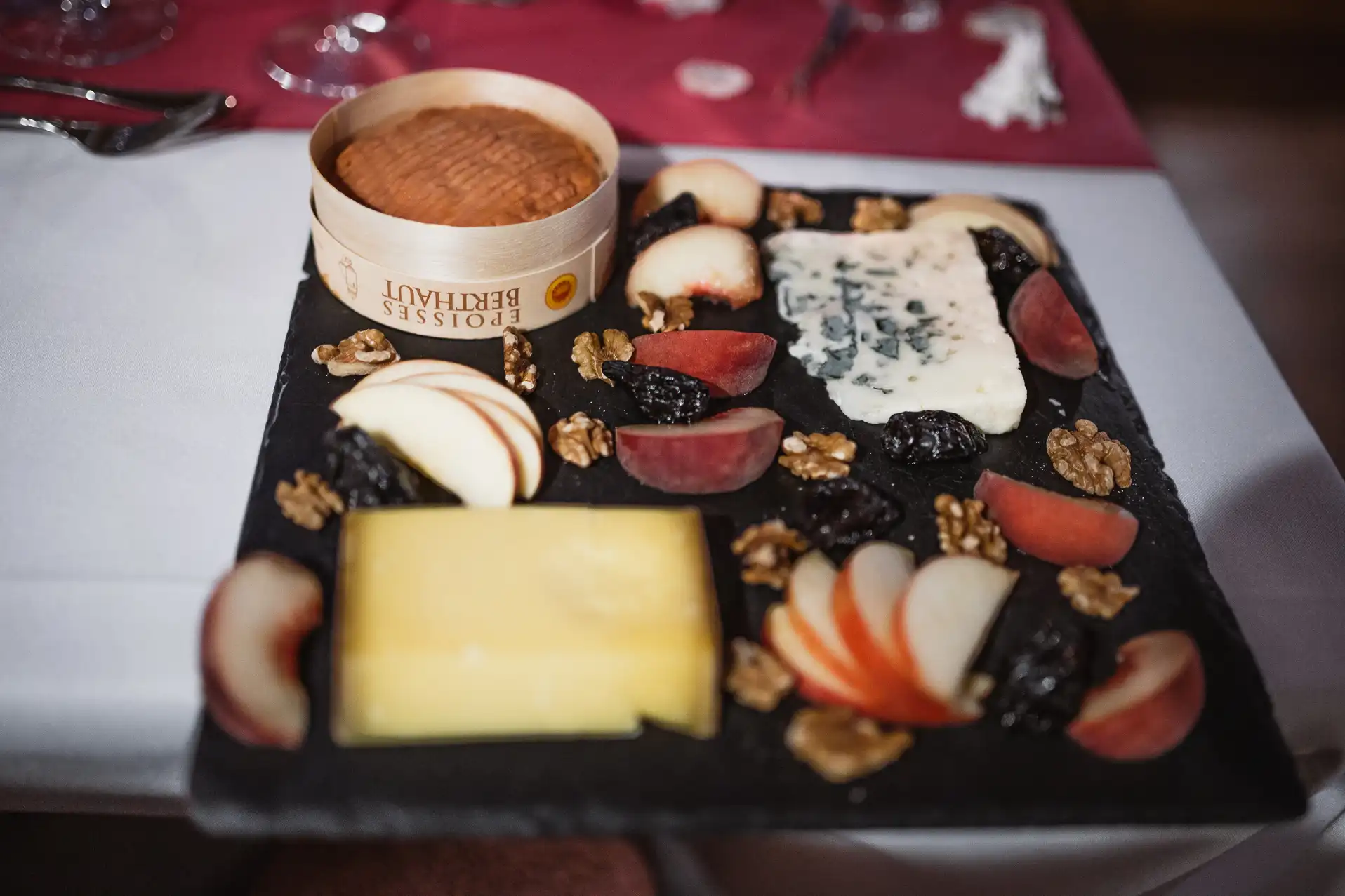
On our luxury barge cruises, we take great pride in our cheeseboard selection. So much so, we offer a sample menu of what’s on offer in our brochures! With this in mind, we’re taking a look at the classic French fromage: Roquefort cheese.
What's on the Board: Roquefort Cheese
What is Roquefort?
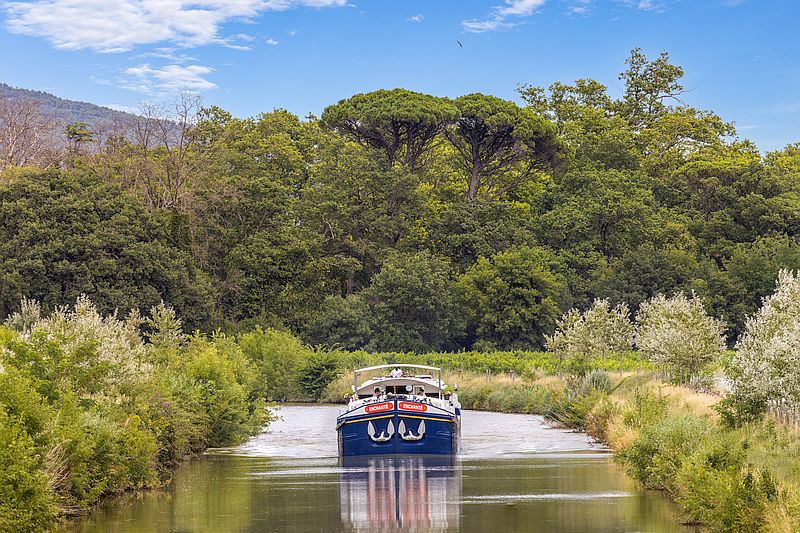
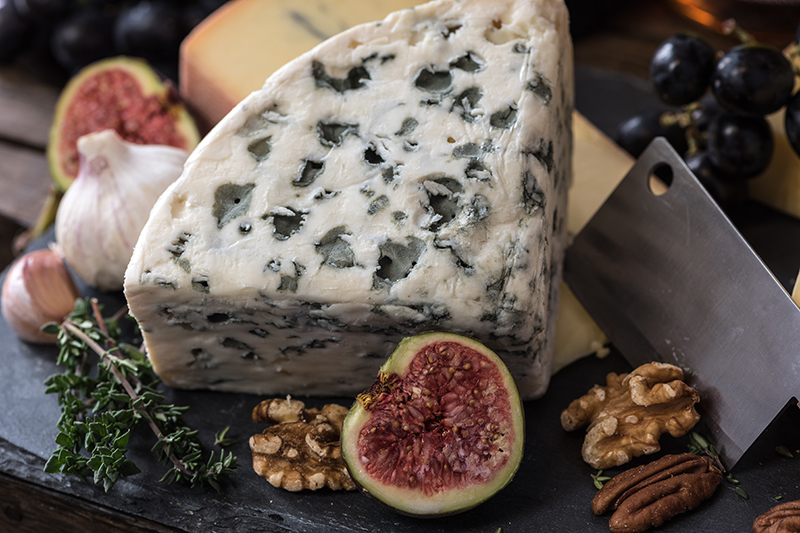
Roquefort is a wonderful blue sheep’s milk cheese, produced in the Aveyron department of southern France. It’s rich, creamy and salty in flavour, and is perfect with Muscat grapes, figs or walnuts. It is served most often on our Canal du Midi cruises aboard Enchanté, Anjodi, and Athos.
Legend has it that Roquefort cheese was discovered when a young shepherd, eating his lunch of curds, saw a beautiful girl in the distance. Abandoning his meal in a nearby cave, he ran to meet her. When he failed to catch her, he returned to his now mouldy lunch and ate it out of pure hunger… and what a delight it was!
Roquefort was also apparently a favourite of Emperor Charlemagne, and that is why it is called the ‘cheese of kings and popes’ in France. In 1925, Roquefort was the first cheese to be granted the title of ‘Appellation d’Origine Contrôlée’ more commonly known as simply ‘AOC’ and is an international guarantee of Controlled Designation of Origin.
Understanding Blue Cheese Varieties
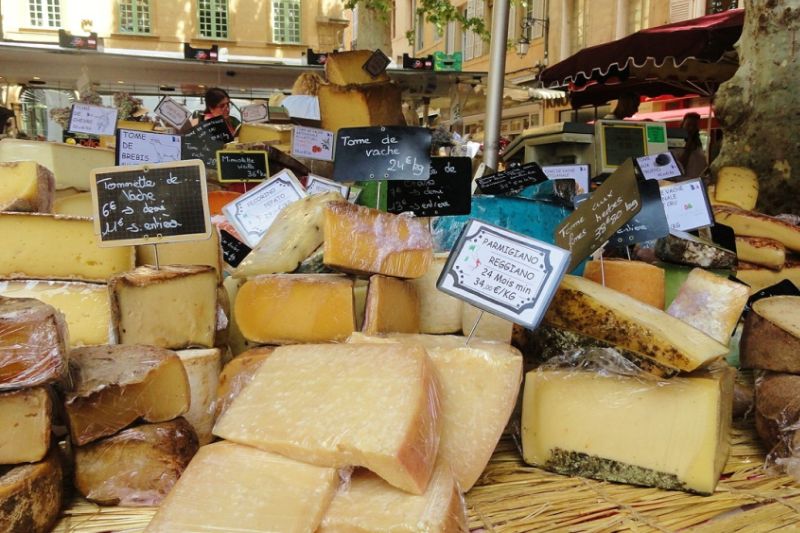
There is a wide variety of blue cheeses from around the world, and within France. They are made by including additional cultures of edible moulds, giving the cheese the characteristic of having blue veins running through it. The flavour varies with the cheese from mild to strong, along with its smell. This is a cheese that might relate to one of the French ‘smelly’ cheeses when very ripe. You can read more in our blog on: French Cheese.
The flavour can vary too, from sweet to sharp to salty. How it is made, which type of milk, and even the process order can alter the outcome greatly. So, if you have not been a huge fan of blue cheese in general, we hope you will try whilst onboard as we have many guests who have been very surprised to discover they are actually a fan of some blue cheeses.
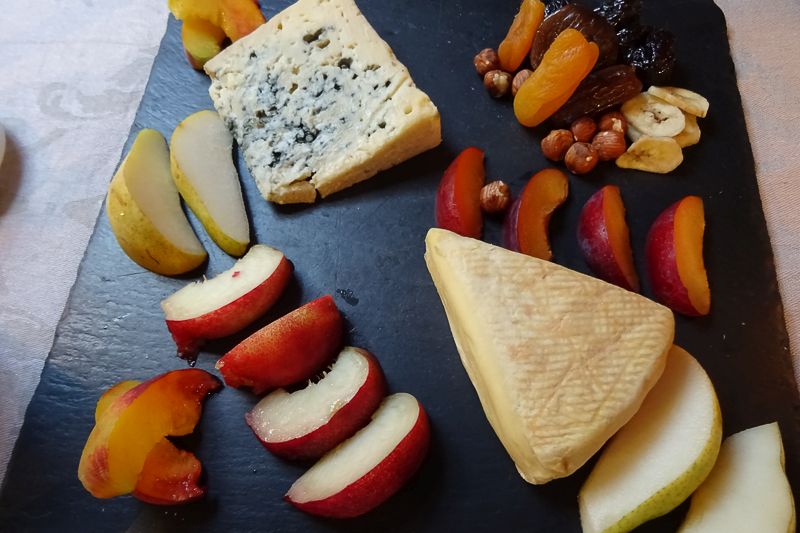
Roquefort: The Best Blue Cheese?
Roquefort is a type of blue cheese, specifically made from sheep’s milk in the limestone caves of Roquefort-sur-Soulzon. It differs from other blue cheeses in the type of milk and how it is made. In contrast, Italy’s Gorgonzola and Britain’s Stilton are made from cow’s milk. The varying types of milk and processes result in very different and distinct flavours.
Traditional blue cheeses for blue cheese dressing are generally from Denmark, which is a little drier and crumblier in texture. Whilst Roquefort cheese is more moist and creamy in texture and taste.
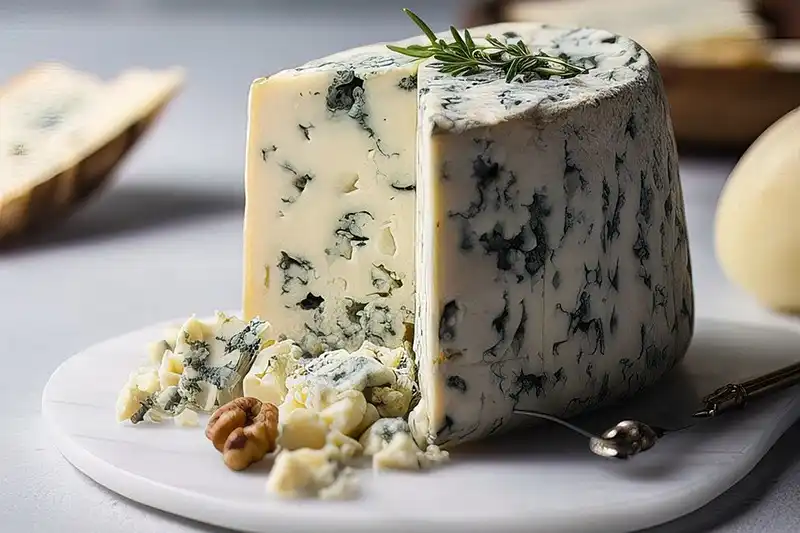
What makes Roquefort Cheese Unique?
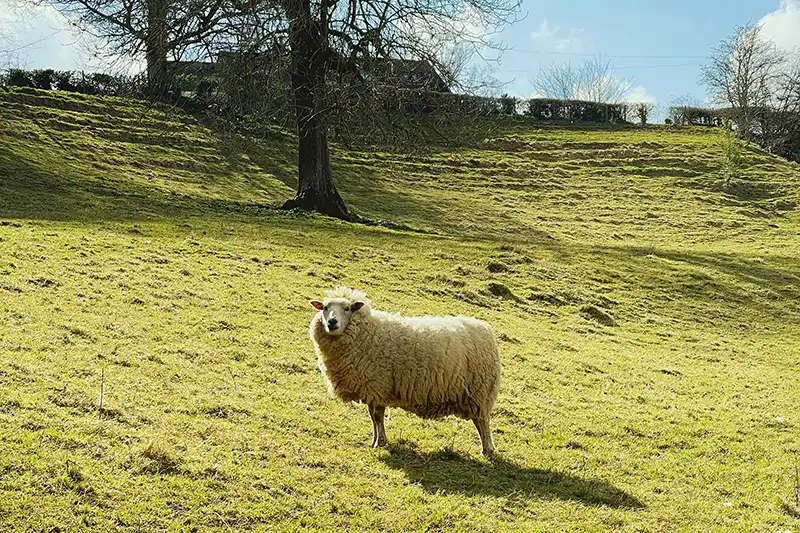
Because of its AOC, Roquefort can only be produced in the caves of Roquefort-sur-Soulzon to legally be called Roquefort. Roquefort cheese is made from the flavourful milk of ewes of the Lacaune breed produced throughout Aveyron and a single ewe produces enough milk for around 100 pounds of Roquefort each year. Traditionally Roquefort cheesemakers would extract ‘Penicillium Roqueforti’, the mould which gives the cheese its distinctive character, by leaving bread in the caves for six to eight weeks until it was consumed by the mould. The interior of the bread was then dried to produce a powder, which they would inject into the cheese. Nowadays this mould is made by more sophisticated methods.
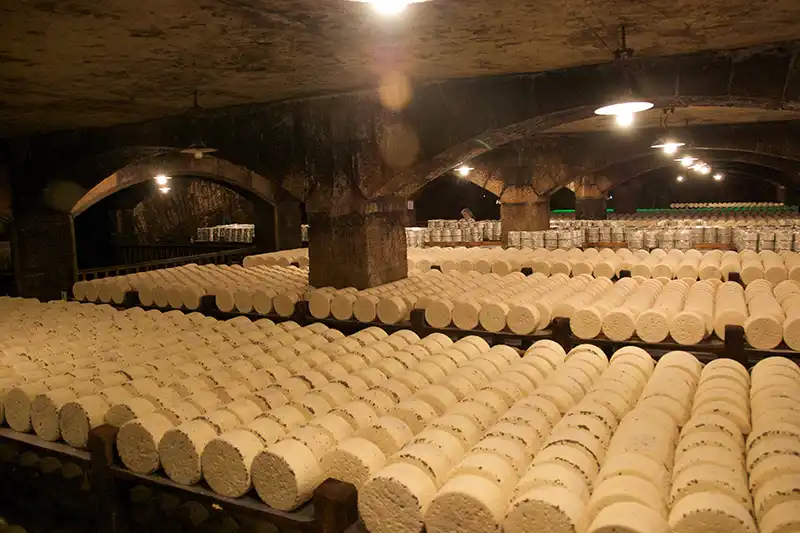
Once the ‘loaves’ of cheese have been made, they are put into a salting tub for 5 days before any excess salt is removed. When this ‘pampering’ process is over, the loaves are pierced with needles some forty times from top to bottom, before being stored in the famous Roquefort cheese cellars to ripen slowly uncovered for 2 to 3 weeks on oak wood that helps capture the humidity.
When the cellar manager decides that the mould has developed sufficiently, the loaves are wrapped in tin foil and stored at a slightly higher temperature to further mature. Roquefort cheese will take up to nine months to reach maturity. Well worth the wait!
Discover The Roquefort Cheese Caves
Because of its AOC, Roquefort can only be produced in the caves of Roquefort-sur-Soulzon to legally be called Roquefort. Roquefort cheese is made from the flavourful milk of ewes of the Lacaune breed produced throughout Aveyron and a single ewe produces enough milk for around 100 pounds of Roquefort each year. Traditionally Roquefort cheesemakers would extract ‘Penicillium Roqueforti’, the mould which gives the cheese its distinctive character, by leaving bread in the caves for six to eight weeks until it was consumed by the mould. The interior of the bread was then dried to produce a powder, which they would inject into the cheese. Nowadays this mould is made by more sophisticated methods.
Once the ‘loaves’ of cheese have been made, they are put into a salting tub for 5 days before any excess salt is removed. When this ‘pampering’ process is over, the loaves are pierced with needles some forty times from top to bottom, before being stored in the famous Roquefort cheese cellars to ripen slowly uncovered for 2 to 3 weeks on oak wood that helps capture the humidity.
When the cellar manager decides that the mould has developed sufficiently, the loaves are wrapped in tin foil and stored at a slightly higher temperature to further mature. Roquefort cheese will take up to nine months to reach maturity. Well worth the wait!
Wine and Cheese: A Perfect Pairing
It’s always a question of what goes well with what when pairing cheese and wine. Roquefort is actually an easier cheese to pair due to its creamy and salty flavours. It may surprise some that even though it is a stronger flavoured cheese, it would not typically be paired with a red wine. Rather, it would be paired with a white wine, preferably sweeter.
The classic pairing is a Sauternes, the anticipated sweetness compliments the saltiness of the cheese beautifully. A Vouvray Moelleux, a unique late harvest wine, is also a good choice. There have been studies that clarify how well the acidity and sweetness of these wines counterbalance the creaminess and saltiness of blue cheese.
Blue Cheese: Then and Now
History tells us that blue cheese has been around for over two thousand years. It has dated as far back as 400 to 800 BC in Austria, where it was consumed with beer. Roquefort cheese itself was created back in the 7th century or 600 AD. It just goes to show that great things stand the test of time and often get even better!
There are many more types of blue cheese in France; Bleu d’Auvergne (also from the same region as Roquefort), Fourme d’Ambert and Saint Agur, with different flavours and textures. These days Roquefort cheese is the best known and one of the most famous cheeses from France. We welcome you onboard Enchanté, Anjodi, or Athos to try it, and tell us if you agree!