English
 Spanish
 French
 German
 Norwegian
 Portuguese
 Swedish
 Italian
 Russian
 Simplified Chinese
 Japanese


A Complete Guide to France’s AOC: What it Means and Why it Matters
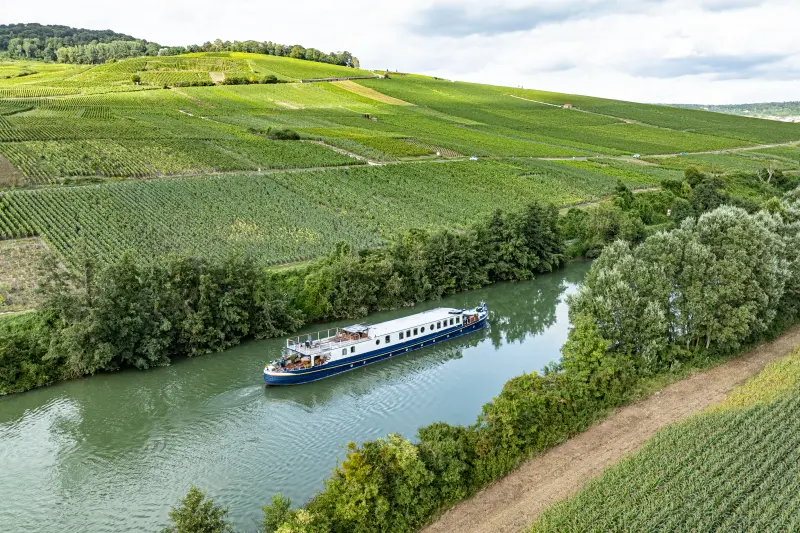
If you enjoy fine wine and are planning on visiting France in the near future, you may wish to find out more about the French certification, AOC or Appellation d’Origine Contrôlée, which translates to ‘Controlled Designation of Origin’. While onboard a European Waterways hotel barge, guests will have the opportunity to enjoy many AOC wines from the region they are cruising in, as well as a taste of the best of France’s Great Wine Regions.
Because the Appellation d’Origine Contrôlée concept is so uniquely French, understanding the AOC method may help to better understand what makes French so wines different. Or at the very least, have a better understanding of the traditions of France when it comes to wine making.
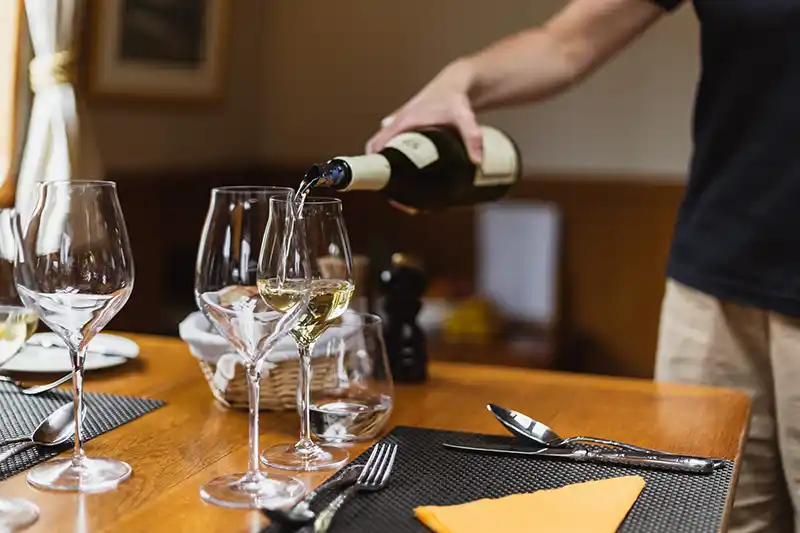
What is the Appellation d'Origine Contrôlée (AOC)?
The French government certifies that all wines, cheeses, and some agricultural goods are made in the area that they are produced, using specific ingredients, and in a specific manner. This certification is known as the Appellation d’Origine Contrôlée (AOC), also known as AOP (Appellation d’Origine Protégée).
AOC is about quality control and refers to standards set for wines made in France. There are currently 363 AOCs for wine and spirits, which regulate everything from the types of grapes used to pruning methods, distance of rows to what ultimately ends up in the bottle, even how many bottles can be produced.
Appellation Analogy
The easiest way to think of Appellations is to think of them as counties. They are a designated area that encapsulates a few villages or towns. This area is unique in its terroir; the soil, topography and weather that is special to that location. (If you wish to fully understand what terroir is, read our post: What is Terroir?)
Because this area is deemed unique, it is recognised and showcased. The AOC system then applies its ‘rules’ to that specific area to ascertain that the customer gets the best quality and that the product meets expectations continuously.
What are the most iconic Appellation d'Origine Contrôlée (AOC) products?
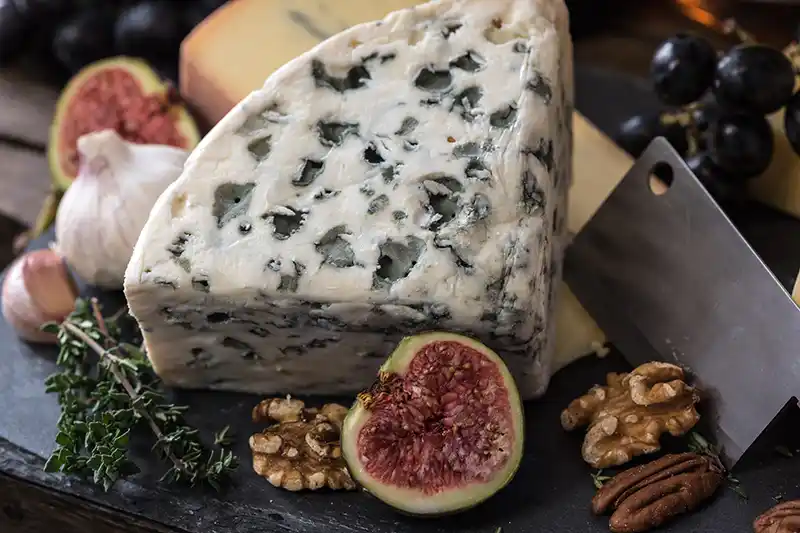
Among the most iconic are Roquefort, a renowned sheep’s milk blue cheese aged in the natural caves of Roquefort-sur-Soulzon, and Brie de Meaux, a creamy and earthy soft cheese from the Île-de-France region. French wines are equally celebrated, with Bordeaux producing exceptional red blends featuring Cabernet Sauvignon and Merlot, and Burgundy wines specializing in world-class Pinot Noir and Chardonnay. The sparkling effervescence of Champagne, crafted exclusively in its namesake region, adds a touch of elegance to any occasion.
Beyond cheese and wine, the Normandy region is famed for its butter and cream from Isigny, prized for their rich texture and exceptional flavour, making them staples in both traditional and gourmet cooking. These AOC products are not just food and drink -they’re a testament to the legacy and passion of French craftsmanship.
When were the Appellation d'Origine Contrôlée laws first established?
The origins of AOC can be traced back to the 15th century when a French parliamentary order was created regulating Roquefort cheese production. Therefore, Roquefort cheese was the first cheese to be protected under the Appellation d’Origine Contrôlée. We then have to wait until 1937 to see a similar recognition for wine. The first wine AOC was Châteauneuf-du-Pape, when a wine growing lawyer sought legal recognition for the Côtes du Rhône as being something unique and special.
Because the Appellation d’Origine Contrôlée is about recognising quality and localised characteristics, it is continuously shaping, with more areas being recognised over time. As recently as October 2023, France has approved a new AOC – Sable de Camargue. This area has a long tradition of producing distinctive gris-style wines and was recognized as an Indication Géographique Protégée (IGP) region. The IGP has been amended to an AOC.
Indication Géographique Protégée versus Appellation d'Origine Contrôlée
We’ve found the best way to view the quality recognition system in France is to think of it like a 4-tiered wedding cake, with the tiers getting smaller toward the top. All the same quality cake, but with different ‘decorations’ and quantity for each level.
The AOC system is the top layer, the smallest and hosting the most rules. Below that is the larger regional Appellation, covering a broader area. If you are American, think State versus County. You may recognise this as Burgundy or Bordeaux, rather than the more specific Gevrey-Chambertin or Saint-Émilion. This tier has a few less rules, such as maybe a little more variety in the choice of grape, processes or blend to use.
The next and larger tier down is IGP which stands for Indication Géographique Protégée (Protected Geographical Indication). The European Union originally applied this to agricultural products whose production and processing occur in a specific geographic area. And whose quality, reputation, or other characteristics are dependent on their geographic origin. Wines were added to this designation in 2009. IGP is similar to AOC in its concept, but with more flexibility and less rules.
The last and largest tier is Vin de France. This can encompass any wine that does not apply the rules from the above tiers. This could be because of the percentage of blend or even that the grape variety is not one of the ‘approved’ types for the above levels. If you are into truly different grape varieties, this is the level you may wish to look for.
The Basic Rules of Appellation d'Origine Contrôlée
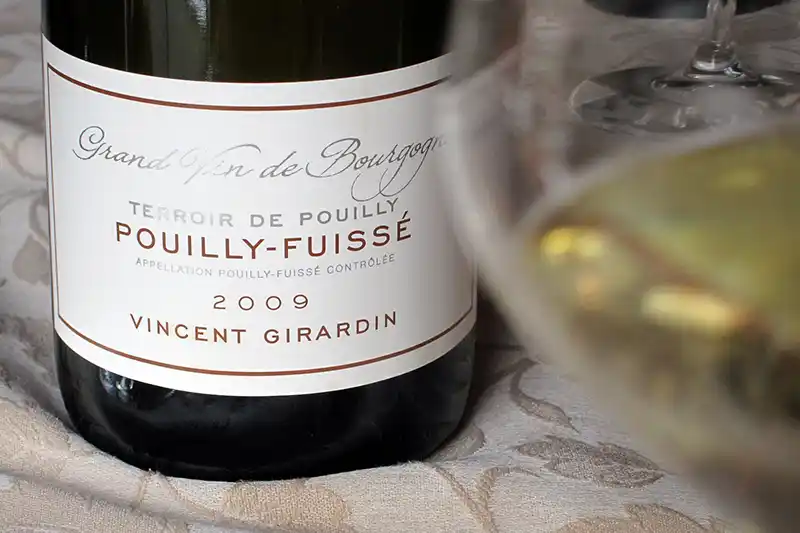
There is in fact a regulatory commission that makes certain wine makers follow the rules of their appellation. Each appellation has specific rules applied to them, but essentially what is regulated by law includes: which grape variety, quantity of vines, maximum yield, production style, minimum ageing time, alcohol levels, location of the vineyard and of course its terroir.
Let’s use the Sancerre appellation to illustrate. In this AOC area only Sauvignon Blanc is permitted for their white wine, Pinot Noir for the red. A maximum of 60 hectolitres is allowed per hectare for Sancerre blanc, whilst Sancerre rouge and rose maximum is 55 hl/ha. The vineyards must have a minimum density of 6,100 vines per hectare. There must be a maximum of 1.30 metres spacing between rows, whilst spacing between the rows must be between 0.80 and 1.25 metres.
Pruning must be in the guyot style and even designates the number of buds allowed. Minimum alcohol content is 10.5% for Sancerre blanc, 10% for reds. Even the number of dead or missing vines is regulated (maximum 20%). This isn’t a finite list, but it gives you a taste of what is involved to make an appellation wine. A lot!
And There’s More
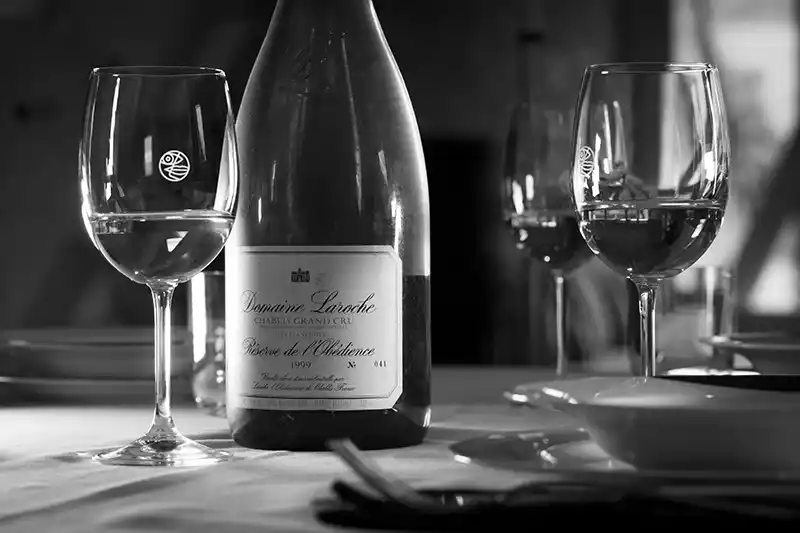
Within these rules are additional classifications, but they vary depending on the appellation. In example, you may have heard of grand cru and premier cru? Grand cru is a classification that showcases the best quality within an appellation and can apply to a specific vineyard plot (in Burgundy, Alsace and Champagne) or a château where the wine is made (in Bordeaux).
Premier cru is a little more complicated as it differs based on the appellation’s area. In Burgundy, it denotes a vineyard of excellent quality, but a level below the grand cru. In Bordeaux it’s the highest tier within the grand cru classification. Yes, it can get very confusing and there are further classifications, per appellation, but that’s something best looked at when focusing on a specific AOC!
Wineries Can Choose
A winery that is part of the AOC system can make all its wines according to the appellations rules. Or just some of their wines. For example, if a wine maker inherits a vineyard that is not of the AOC’s designated grape variety, they can choose to still make wine from it. Simply, it will be noted as of the region (e.g. Val de Loire instead of Sancerre), IGP or Vin de France, depending on how far away from the beaten track it falls.
There are wineries that choose to make wines in all the tiers, as well as only within their AOC. You can certainly find an amazing wine from an appellation; this is almost a given in France. But you can also find amazing wines at the other levels. It just takes more searching.
Is it Worth It?
Ultimately the AOC system was set in place to guarantee a consistency of quality for the customer, which is regularly tested. This way, you’ll know that when you purchase a wine noted as an appellation wine that you are drinking something truly special.
Aboard our luxury barge cruises in France, we offer a diverse selection of AOC wines to perfectly complement each and every meal served. We will always serve the best from the region, making the perfect opportunity to try what makes wines special in France for yourself.