 English
 Spanish
 French
 German
 Norwegian
 Portuguese
 Swedish
 Italian
 Russian
 Simplified Chinese
 Japanese


As one of the finest surviving examples of a Burgundian ducal residence, a visit to Château de Germolles is a popular excursion on our barge cruises of Southern Burgundy aboard Finesse. It’s a serene setting in which to learn more about the influential dukes who shaped Burgundy in the late medieval and early Renaissance periods.
Ducal Decadence: the Château de Germolles
Philip the Bold
The Valois Dukes of Burgundy – Philip the Bold, John the Fearless, Philip the Good and Charles the Bold – were thought to have ruled over the “Golden Age” of medieval Burgundy, when the groundwork was laid for both a cultural and an economic Renaissance in the region. Philip made the impressive Palace of the Dukes of Burgundy in Dijon his central seat, adding a vast ceremonial hall and kitchens where 30 chefs could prepare a banquet all at once.
In 1380 the Château de Germolles, described as “austere” at first, was offered by Philip to his wife, Margaret III of Flanders. The house would soon be turned into a refined and luxurious country retreat by the Duchess, boasting murals painted by the best artists from the Burgundian School.
Although the palace at Dijon retains very little of its architecture from this period, the house at Germolles is a wonderfully preserved example of the splendour of the ducal court on the eve of the Renaissance.
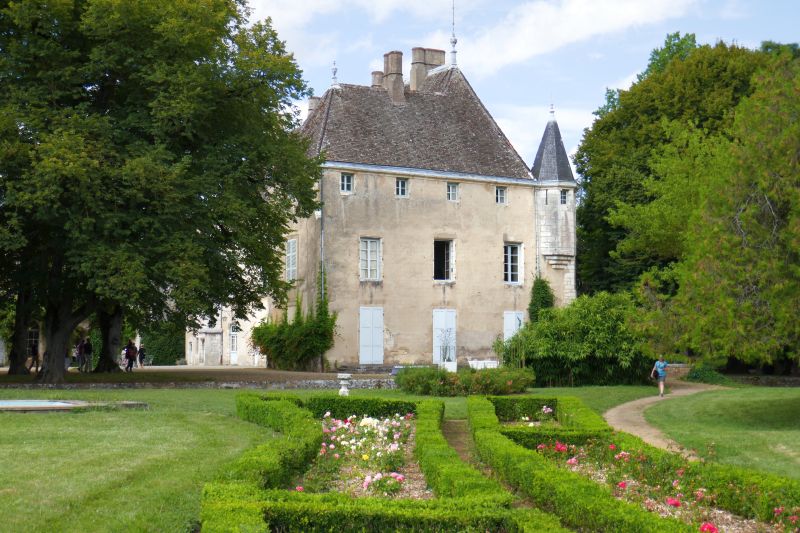
The Château de Germolles
Today, however few of Philip the Bold’s once 50 residences are still extant. Apart from several elements of the Ducal Palace in Dijon, the Château de Germolles is largely preserved. Philip the Bold purchased the then dilapidated fortress in 1380 and the following year he offered it as a gift to his wife. Important and expensive works were undertaken under her see, which lasted for approximately a decade. Margaret of Flander’s aim was to transform the austere and archaic fortress into a luxurious country home and to achieve this she enlisted the help of artists working in the service of the Ducal couple including Claus Sluter and Jean de Meaumetz.
The estate was slowly transformed into a sumptuous country estate, its large rectangular building was surrounded by a moat and enclosed a courtyard. Apartments and two ducal chapels were situated in the south and east wings, while the west wing of the property contained reception rooms and the château’s cellars. The northern wing, which overlooked a drawbridge giving access to the residence, was the domain of guards and security staff. In the Middle Ages, nature was seen as modernity and so rustic activities were established at Germolles, which the Duchess envisioned would create a pleasant environment around her favourite residence, as well as develop local agriculture and providing some income for the maintenance of the domain. A large rose garden was planted in the château’s grounds, and petals were sent to Flanders to be made into rose water. Similarly, a sheep-pen was erected not only to reflect the Duchess’ interest in the animal but the important contribution wool had on the fortune of Flanders.
Following its tenure by Philip the Bold and Margaret of Flanders, the château was handed down to three consecutive Dukes of Burgundy and, after the death of Charles the Bold in Nancy in 1477, it became a possession of the King of France. Used by various families courtesy of the King until the end of the 18th century, the château was sold to the Nation following the French Revolution. Germolles was finally purchased at the end of the 19th century by the family who continue to maintain and inhabit the château today.
Visiting the Château
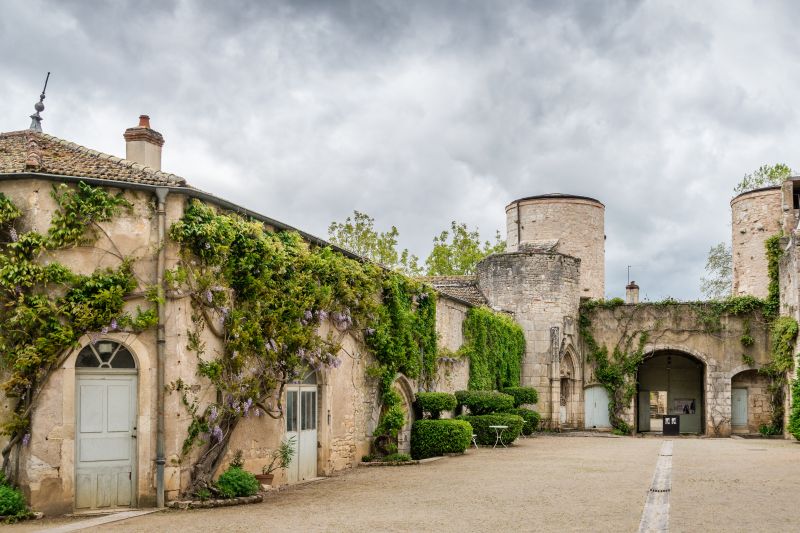
Visitors to the Château de Germolles are immediately struck at the sheer grandeur of this ancient residence. Largely destroyed during the French Revolution and again by a lightning strike in the 19th century, the château may be a shadow of its former self, but it showcases the architectural styles of residences of this nature during the Middle Ages brilliantly. Wings which once housed the numerous apartments occupied by the Ducal family are adorned by large windows on the first floor; below remains of servants quarters sit squat and in shadow, accessible to the ornate rooms above by spiral staircases. The cellars and the lower chapel, remnants of the earlier 13th century fortress, tell tales of its protective past. The architectural styles are numerous and varied, spanning centuries from the Romanesque, Gothic and Renaissance. The moat is largely gone, but traces of it can still be seen in the estate’s sprawling parkland.
Heraldic frescos decorate the private apartments of Margaret’s country residence; the chapels and the Hall of Honour are also impressive late medieval statements, while the thirteenth-century storeroom gives you a glimpse into the effort it would have taken downstairs to maintain such a grand house. Tours are often conducted by the present-day owners of the property, who are able to share a great deal of the château’s glorious past and history lovers aboard the hotel barge Finesse are always impressed and enlightened by this fascinating visit.