English
 Spanish
 French
 German
 Norwegian
 Portuguese
 Swedish
 Italian
 Russian
 Simplified Chinese
 Japanese


From the Yonne to the Saône: Burgundy is rich in architectural heritage, and by far the most impressive of its numerous historical buildings are its Romanesque churches. During a luxury-barge cruise on any of our Burgundy-based boats, you are sure to be captivated by its collection of ecclesial treasures.
Discover Romanesque Architecture in Burgundy
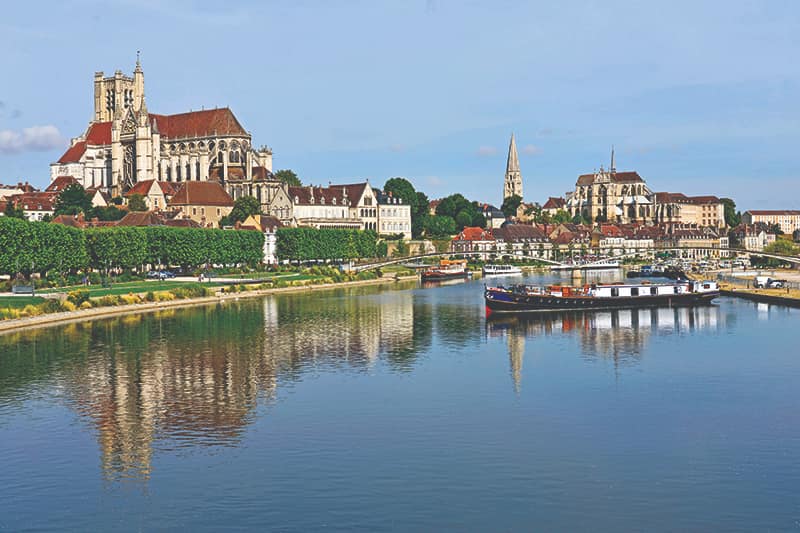
Church of Saint-Peter and Saint-Paul, Moutiers-en-Puisaye
Of all that remains of a once important priory, the Church of Saint-Peter and Saint-Paul in Moutiers-en-Puisaye is a lasting testament to the beauty of Romanesque art in Burgundy. Close to the Château de Ratilly, one of our deluxe 8-passenger barge Renaissance’s foremost excursions, church was first constructed in the 9th century. The monastery was integrated into the possessions of the Bishops of Auxerre and it subsequently became a priory. In the 11th century, it is believed major works were carried out at the priory, during which time it housed important relic which may have encouraged local pilgrimages to the site. The priory and its buildings were sacked by the Armagnacs in the early 15th century and then by the Huguenots during the French Wars of Religion in the 16th century, after which the priory was demolished.
All that remains today is the 11th century church, dedicated to Saint-Peter and Saint-Paul in 1982, during restoration works on the church, the walls, which had been whitewashed at some point in their past, revealed what is still one of the largest pained medieval decorations in Burgundy. The north wall of the nave and the first bay of the south wall are occupied by a decoration painted towards the end of the 12th century. Two decorative registers frame middle register where scenes of the life of Christ appear, including the Annunciation, Visitation and the Nativity. On the south wall, the paintings are not quite as old but are still in the Romanesque style, while those on the eastern wall are mainly gothic, similar to that of the School of Paris at the end of the 13th century. The church is an exceptional pictoral treasure which absolutely deserves the detour made by this small village of Puisaye, with a prestigious medieval past.
Basilica of Sainte-Marie Magdalène, Vézelay
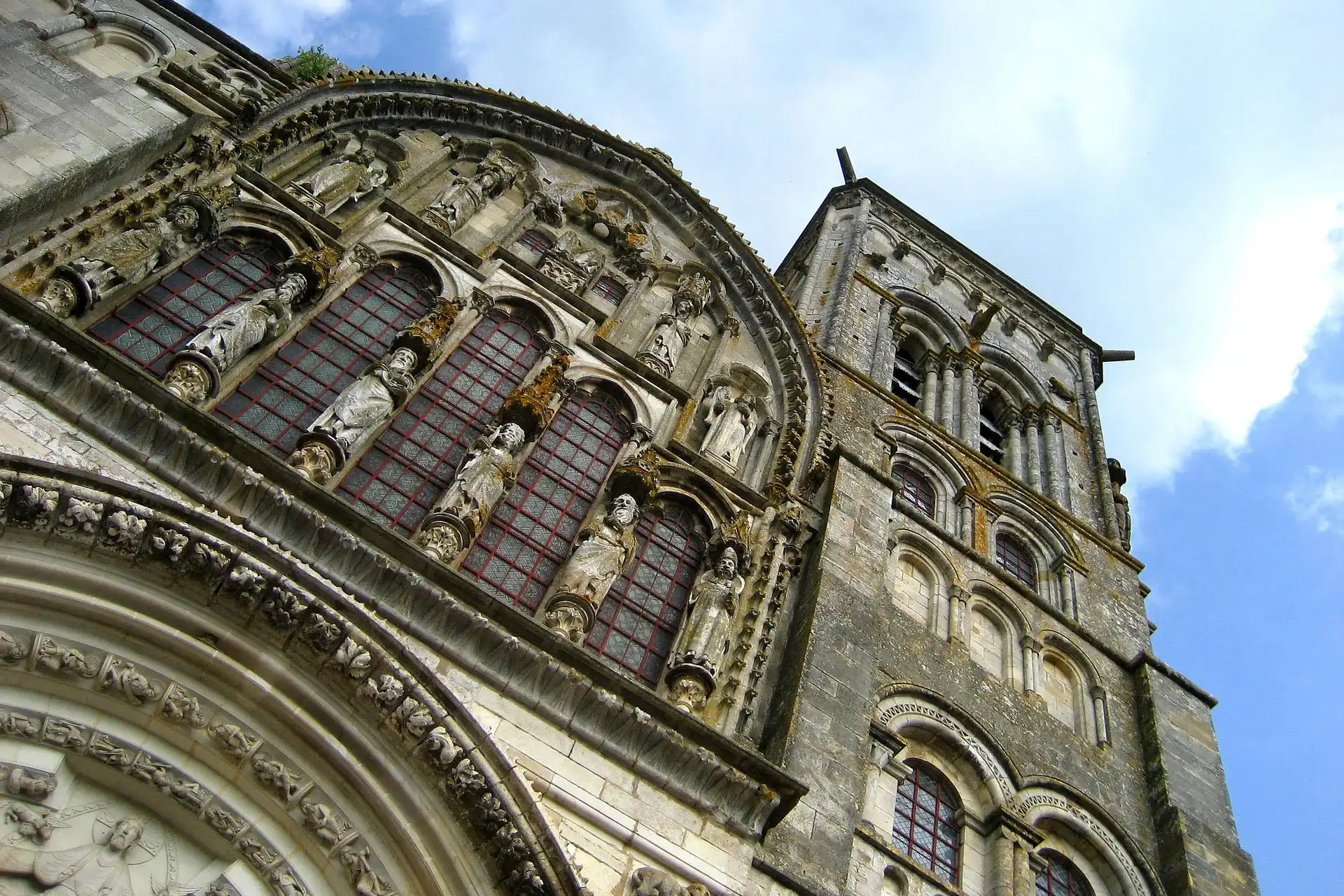
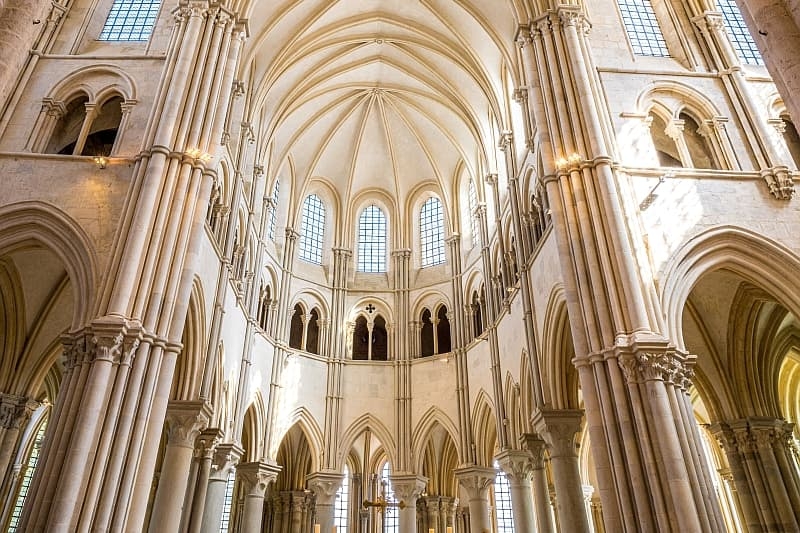
Guests aboard the 8-passenger L’Art de Vivre can admire in awe the stunning Basilica of Sainte-Marie Magdalène, constructed to house the relics of the said-saint and to welcome pilgrims on the road to Santiago de Compostella in northwestern Spain. Built atop a hill offering panoramic vistas over the Yonne countryside, the Basilica was founded in the late 9th century on a former Roman and Carolingian site and was rebuilt between the 11th and 13th centuries. The famous 12th century tympanum, visible from the narthex, shows Romanesque carvings depicting an enthroned Christ radiating his holy spirit and message to the Apostles. The nave has typically round Romanesque arches and detailed capitals, while the transept and choir were rebuilt in the Gothic style following a fire in the 14th century. The mid-12th century crypt houses a reliquary reputedly containing the relics of Mary Magdalène.
Following desecrations by the Huguenots in the 16th century and vandalised during the French Revolution, by the mid-19th century the Basilica was on the point of collapse. In 1840, the renowned French architect Viollet-le-Duc, famed for his work on the enclosed city of Carcassonne in the South of France, undertook the daunting task of rescuing the structure. His work, which included reconstructing the western façade and its doorways, helped Vézelay, and its Basilica, spring back to life.
The Abbaye de Fontenay
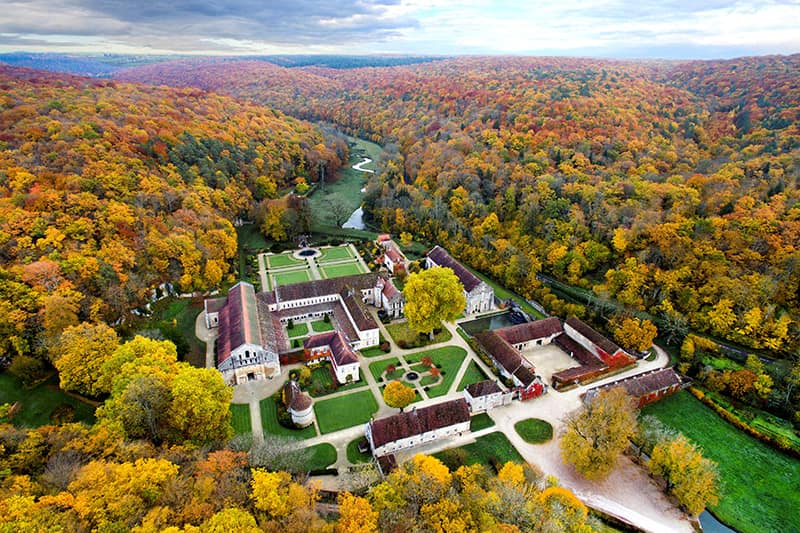
A popular excursion on La Belle Epoque’s cruise route through the heart of the Côte d’Or, the Abbey de Fontenay is among the best-preserved Cistercian abbeys in the world. Founded in 1118 by Saint Bernard of Clairvaux, a leading French saint, Fontenay Abbey is enshrined as a UNESCO World Heritage Site and offers a fascinating glimpse of the austere, serene surroundings in which Cistercian monks lived lives of contemplation and manual labour. Set at a road’s end in a bucolic wooded valley beside a tranquil stream, this restored masterpiece of medieval monastic architecture includes an unadorned Romanesque church, barrel vaulted dormitory and Europe’s earliest metallurgical forge, complete with a working reconstruction of the hydraulic hammer used by 13th century monks.
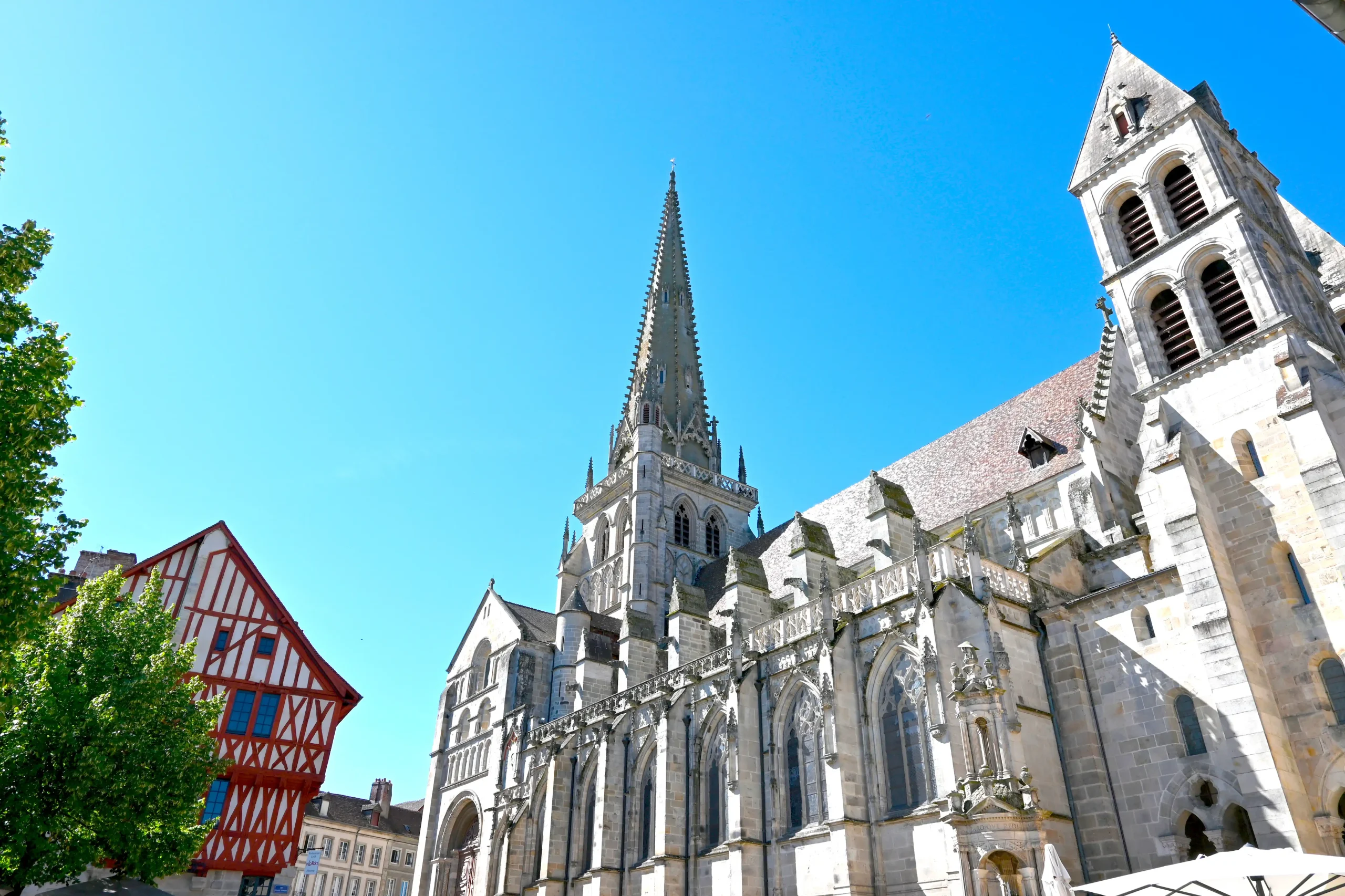
Cathedral of Saint-Lazarus, Autun
Originally Romanesque, the 12th century Cathedral of Saint-Lazare in Autun was built to house the sacred relics of Saint Lazarus and is a popular excursion on board our deluxe 8-passenger hotel barge Finesse. Over the main doorway, its famous Romanesque tympanum shows the Last Judgement surrounded by zodiacal signs and was carved by Gisebertus, a master mason whose name is visible in the centre of the great work, in the 1130s. Ornamental capitals by Giselbertus and his school adorn the columns of the nave. While the majority are still in situ, especially exquisite capitals have been restored or replaced and are on display at eye-level upstairs in the chapter room.
Crypt of Saint-Bénigne, Dijon
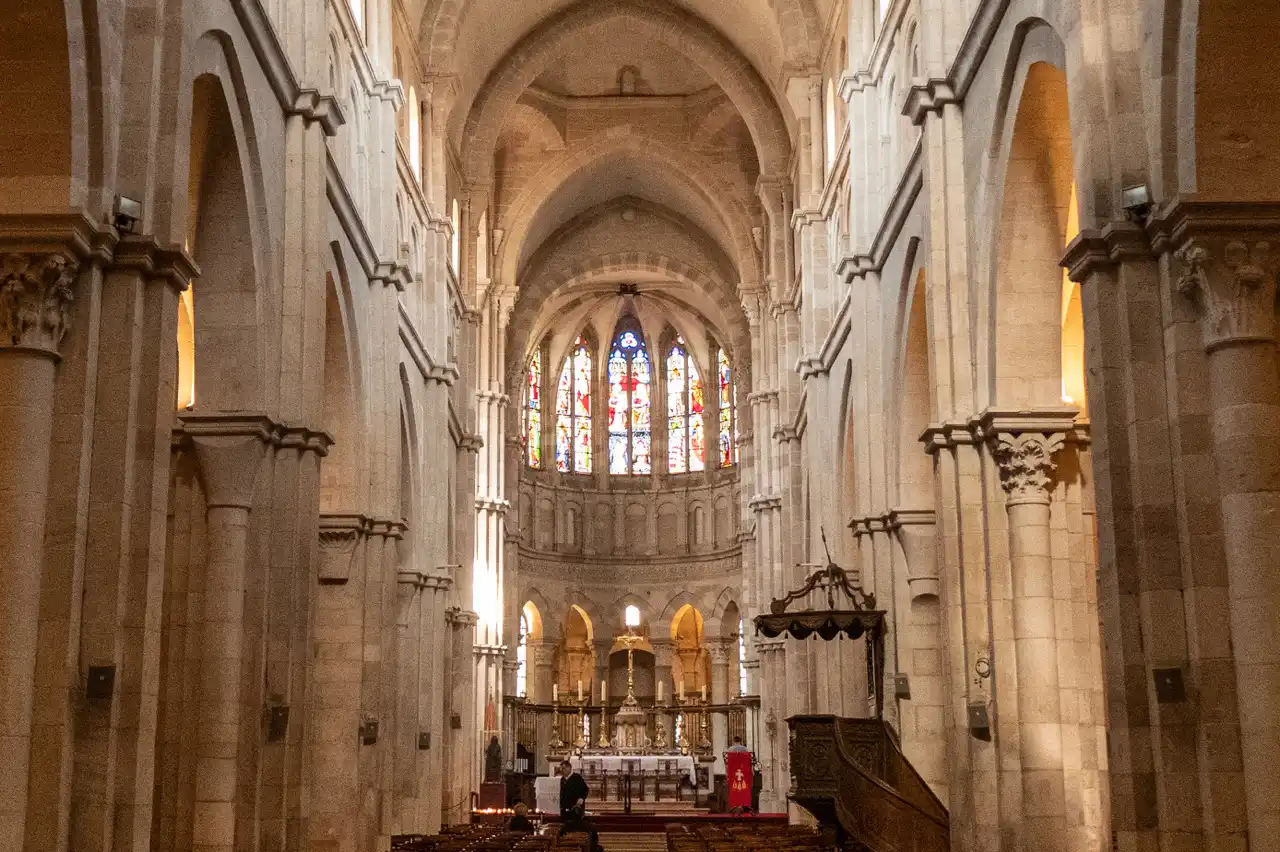
Hidden away beneath the bustling streets of Burgundy’s administrative capital, Dijon, lies a secret. The Abbey of Saint-Bénigne may not seem like very much from outside but inside, its gigantic Gothic-arched nave, Romanesque chapter house and High-Gothic dormitory will surely be enough to take your breath away. More so, climbing down the two-dozen or so steps into the crypt, you will enter another world.
The church above was constructed sometime in the 12th century in the Gothic style following the destruction of an earlier basilica which contained the supposed relics of Saint Benignus. Legend states the relics had been housed in a sarcophagus and then placed in the basilica’s crypt in the 6th century by Saint Gregory of Langres and, despite centuries of conflict and fire, the crypt remains one of the best-preserved examples of early ecclesiastical architecture in France.
The crypt, which was extended during the construction of the basilica in the 11th century, is in the form of a rotunda and retains much of its original layout; three circular bays are supported over three storeys by columns, each richly decorated with Romanesque motifs depicting praying figures and ornate patterns. In the centre of the crypt, a hole in the ceiling allows light to flood the space, while the ambulatory on the outside ring opens into a small rectangular chapel, in which the relics of Saint Benignus were venerated.
Collegiate Church of Notre-Dame, Beaune
One of the first urban churches built in Burgundy, the Collegiate Church of Notre-Dame in Beaune was constructed shortly after the cathedral of Autun, the diocese to which Beaune belonged. On a plan comprising a choir with an ambulatory and three radiating chapels, heightened in the Gothic period, the church is a good example of early Clunaic architecture. In the façade, a superb open porch was added in the 14th century and a Renaissance-style chapel was added on the south side of the nave. In the 17th century an Italian-style dome was added over the crossing.
Discover Romanesque Art on a Burgundy Barge Cruise
Step into a world of Romanesque art and timeless beauty on a luxury barge cruise through Burgundy. Let each moment reveal hidden gems of history and culture, curated for the discerning traveller. To embark on an unforgettable Burgundy barge cruise, connect with our Cruise Team today – or discover more inspiration by exploring our blog.