 English
 Spanish
 French
 German
 Norwegian
 Portuguese
 Swedish
 Italian
 Russian
 Simplified Chinese
 Japanese


Wine and Cheese: A Very French Pairing
On any of our hotel barge cruises, one of the wonderful ways you can experience the best of your cruising region is through local cuisine. Our barge chefs and sommeliers are aficionados of the local produce and as such, they will pair some of the finest French wine and cheese. Prepare for the flavours of a lifetime!
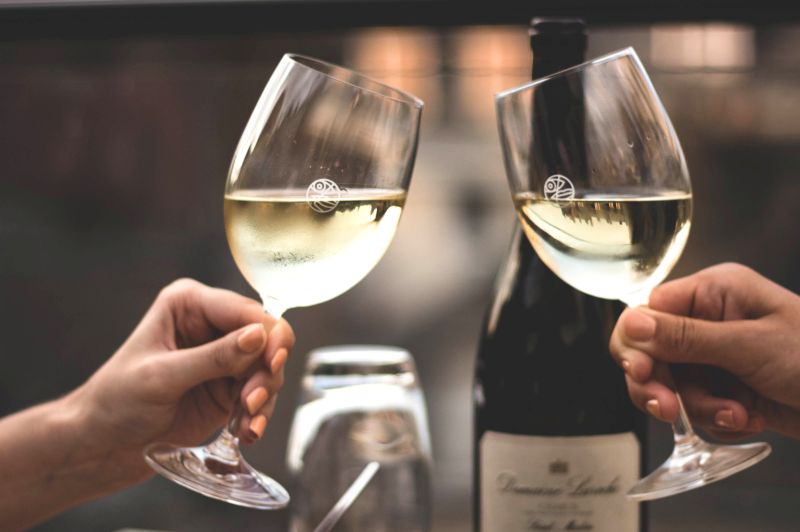
Proudly Produced in France
There are a number of similarities between French wine and cheese – staples of the French diet! Both go through a fermentation and ageing process, and both have flavours that vary depending on the soil, sunlight, rainfall and geography of the area (known as the ‘terroir’) in which they are produced. And in France, both are given the esteemed certification of AOC (Appellation d’Origine Contrôlée) to indicate the quality and provenance of their traditional production.
Like wine, the tasting of cheese is something of a science, as different regions produce so many diverse flavours in all shapes, sizes and colours. If you are a cheese connoisseur, you will certainly be able to indulge your passion on any of our hotel barge cruises in France, where we pride ourselves on procuring and serving the best each region has to offer.
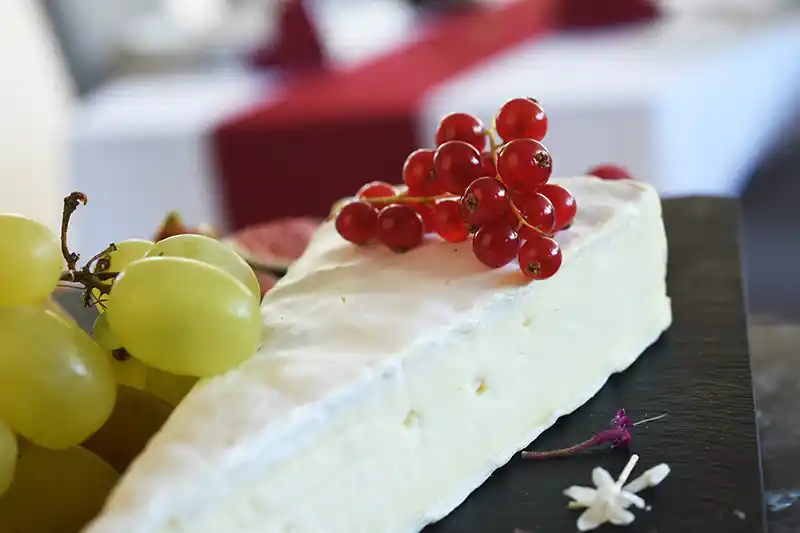
Pairing French Wine and Cheese
Wine and cheese pairing in France began naturally. Many regions produced both wine and cheese. Initially the products from the same locations were often served together. It’s believed that the first true pairing of these delectable delights were monks. During the Middle Ages, the monasteries in France were self-sustaining, growing and making their own food. This included making cheeses as well as cultivating vineyards, most famously at the Clos de Vougeot.
Move on into the Renaissance era (14th – 17th centuries) and we see culinary skills emboldened and flourishing. Trading routes brought new flavours from other regions. Great lavish feasts were held at the courts of France, where wine and cheese pairings were considered the height of cultural sophistication
But Why Wine and Cheese?
There’s actually real science behind pairing wine and cheese. Scientists have enjoyed delving into the French diet for quite some time, and this includes why cheese and wine go so well together. Simply put, the fat of the cheese cuts across – or marries if you prefer – the acidity of the wine. It’s a case of opposites attract that foods that sit on the opposite end of the spectrum naturally complement each other.
Cheese offers up fatty proteins, and it turns out the acidity of the wine balances this. In visual terms, cheese coats the tongue and wine’s acidity essentially removes the fatty proteins: a perfect palate cleanser. And in reverse, it’s the fattiness of the cheese that aids diluting the bitterness or astringency of wine. It also brings out the underlying aromas that may not have been so noticeable before eating the cheese. A perfect complement to each other. (For the deep dive science, click here.)
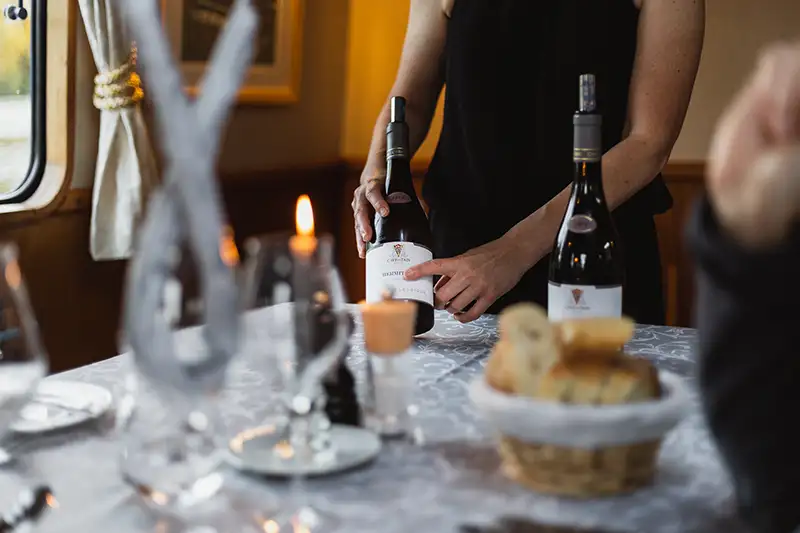
Which Came First?
There’s even an argument about which you should consume first, the wine or the cheese. And again, this is backed up by science. In a nutshell, it was discovered that cheese consumption actually improves the taste of wines. Whilst wine only slightly modifies the taste of cheese.
So, what does that mean when we are actually pairing? Taste the cheese before the wine. It will help pull forth those additional levels and soften as well. We will go a step further and recommend that you actually taste your wine, then taste your cheese and once more your wine. This gives you the full effect of how much cheese compliments and balances the two.
Type of Cheese Matters
In all this studying, it was also determined that types of cheese and wines being paired mattered. The characteristics of cheese, such as saltiness or aroma, are changed and enhanced by different wines. So, a lot of tastings may be required to determine your favourites.
Essentially, there are some simple tricks of where to begin. Hard cheeses go well with higher tannin red wines. If you are not a fan of strong tannins, break out the Comté to offset. Soft cheeses go with lighter wines, so as not to overpower the delicate taste. Blue cheeses are renowned for pairing with a sweeter wine. Something like a Moelleux from the Loire Valley.
It may surprise you that studies also indicate that cheese is enhanced more by dry white wines than red. Yet another excuse to try, try and try again.
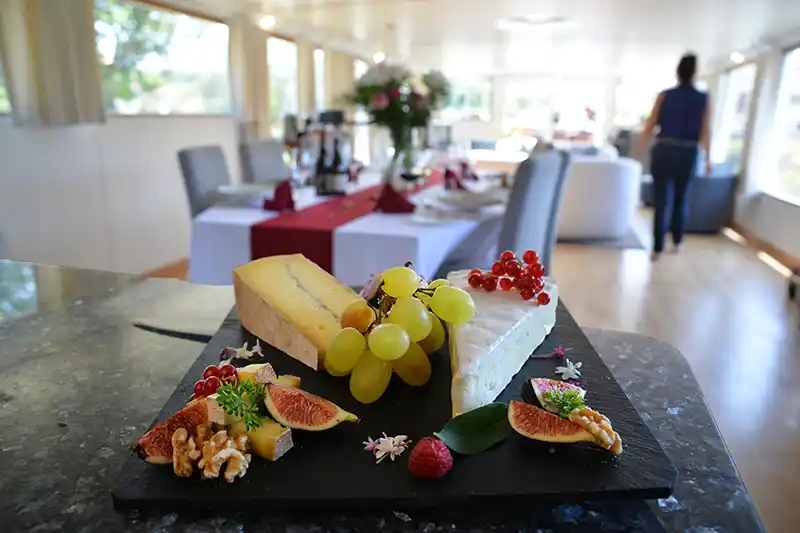
A Cheese to Please All Palates
Cheeses can be classified in a number of different ways. For example, by the country or region of origin. A hard cheese made in the Alpine climes of Beaufort would be incredibly difficult to make in the flat, western region of Normandy.
Another difference is the method of production: for example, the outside of washed rind cheeses is repeatedly dusted with ‘morge’ – a mixture of brine, whey and old cheese scrapings – to create a coloured rind, while the inside of a blue cheese is pricked with needles to grow blue mould.
Cheese: A Brief Dictionary
Some specialised vocabulary is helpful in the understanding of cheeses. One who has become a turophile, or lover of cheese, will no doubt be conversant with the following terms.
Specialty Cheeses – It might be said that every French cheese is a specialty
cheese, but some are more special than others. Artisanal cheeses are those which have been crafted by hand from the finest ingredients, cheeses made on a farm, chalet, or mountain hut are called fermier, a monastery-type cheese is a term that describes cheeses which once were or continue to be made in the monasteries of France.
The Parts of a Cheese – The pâte of a cheese is all that is within the rind or the crust of the cheese. The rind is the part of the cheese formed in the natural, external thickening of the surface, not all rinds are edible. A cheese has a natural rind when it has formed as a result of the drying of the outer surface during ageing. Some cheeses have eyes, which are holes or voids in a cheese produced by gas which has been unable to escape during the curing process.
A Chance to Try
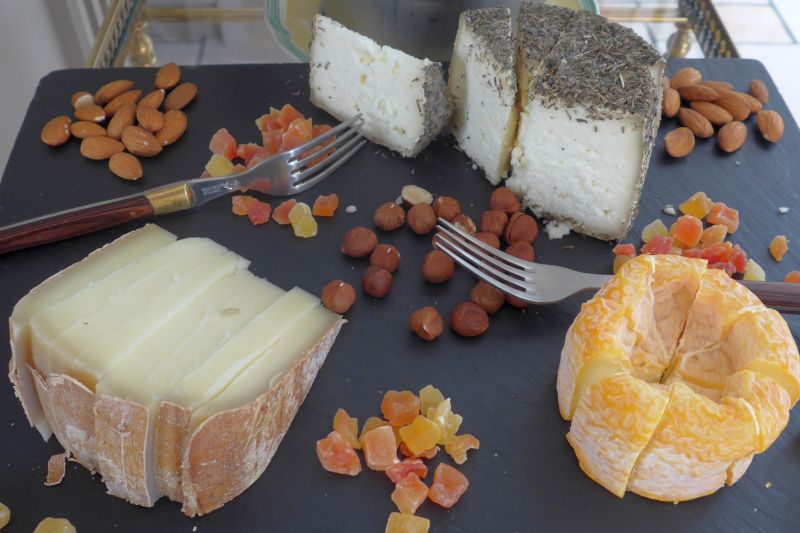
These varying processes and environments create cheeses that are wildly different in texture, smell and taste, which we invite you to try as part of every meal during your ‘culinary voyage of discovery’ with us.
So open your eyes to a world of delicious, French wine and cheese on any of our French hotel barge cruises – we promise that you won’t be disappointed!